

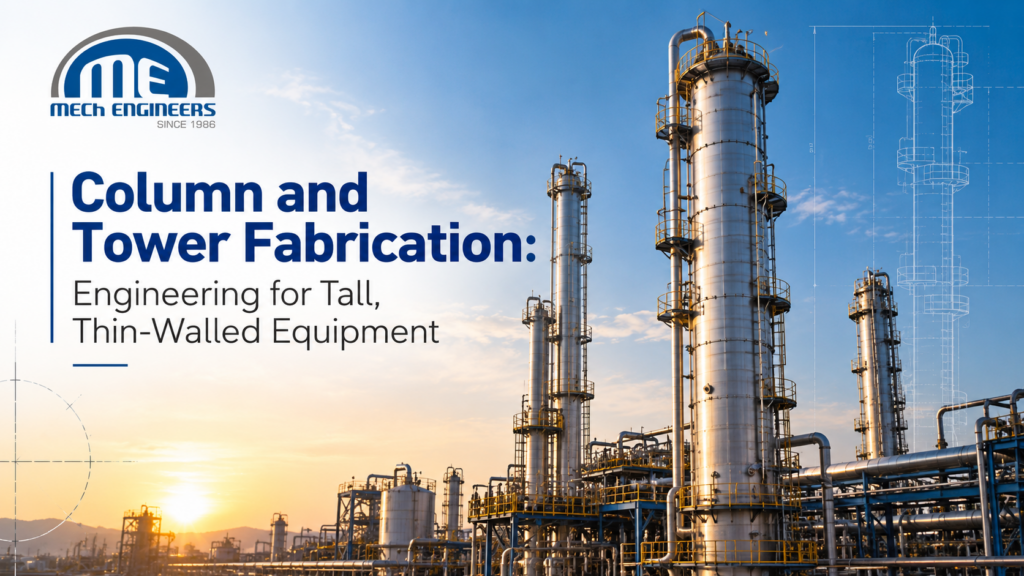
A process column is a pressure vessel, but pressure is often not the only thing that decides how it is built. Once a shell is tall and slender, its wall is thin relative to its…
 Pressure Vessel
Column and Tower Fabrication: Engineering for Tall, Thin-Walled Equipment
 Pressure Vessel
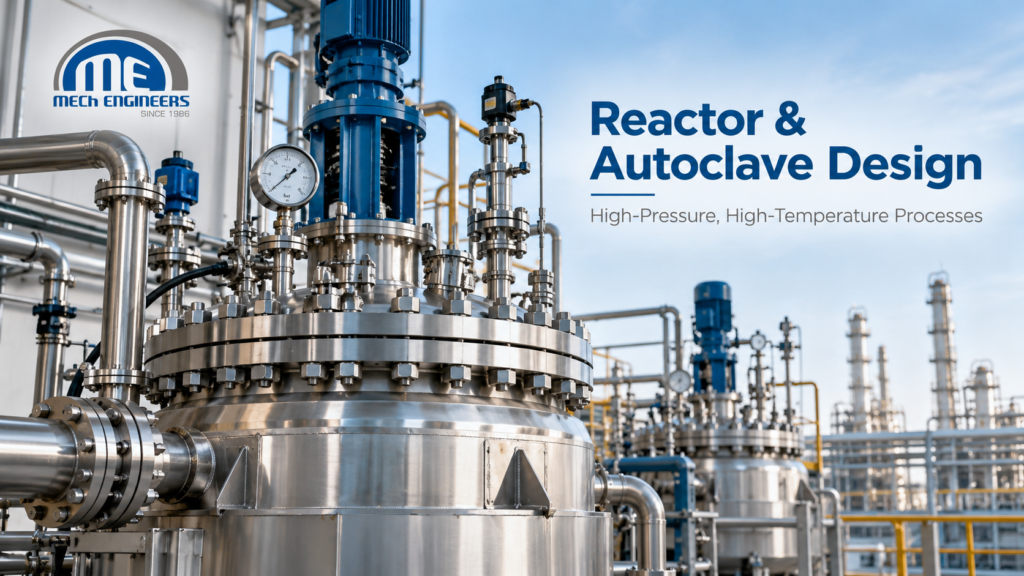
Reactor & Autoclave Design for High-Pressure, High-Temperature Processes: A Practical Engineering Guide
A reactor that works on paper can still fail in the plant. The usual causes are a gasket that creeps at temperature, an alloy that suits the product but not the impurity in the feed,…
 Uncategorized
Duplex vs Super Duplex Stainless Steel: Selecting Metallurgy for Corrosive Service
Choosing between duplex and super duplex stainless steel is one of the most consequential material decisions in chloride-bearing, offshore, desalination and chemical process systems. Pick too low a grade, and you risk pitting, crevice corrosion,…
 Heat Exchangers
Industrial Agitator & Mixer Design for Corrosive Media: A Practical Engineering Guide
Designing an agitator for aggressive chemicals involves two separate engineering problems that have to be solved together. The first is hydraulic: what flow, shear, and circulation does the process need? The second is material and…
 Uncategorized
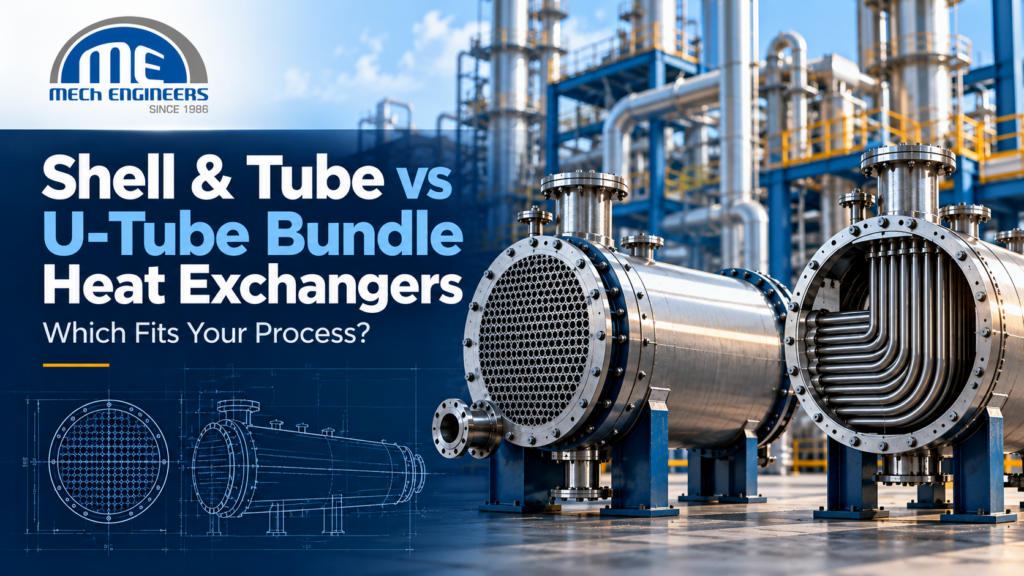
Shell & Tube vs U-Tube Bundle Heat Exchangers: Which Fits Your Process?
Heat exchangers sit at the center of most industrial processes, moving thermal energy between fluids so that reactions, separations, and utility systems run at the temperatures they were designed for. Because a poorly matched exchanger…
 ASME
ASME Certified Pressure Vessel Manufacturer: How U vs U2 Stamps Affect Your Choice
A vessel specification says “ASME Section VIII Division 1, U stamp,” or Division 2 with an ASME U2 stamp. Bidders send certificates that all look valid. The useful question isn’t whether they hold a stamp,…
 Pressure Vessel
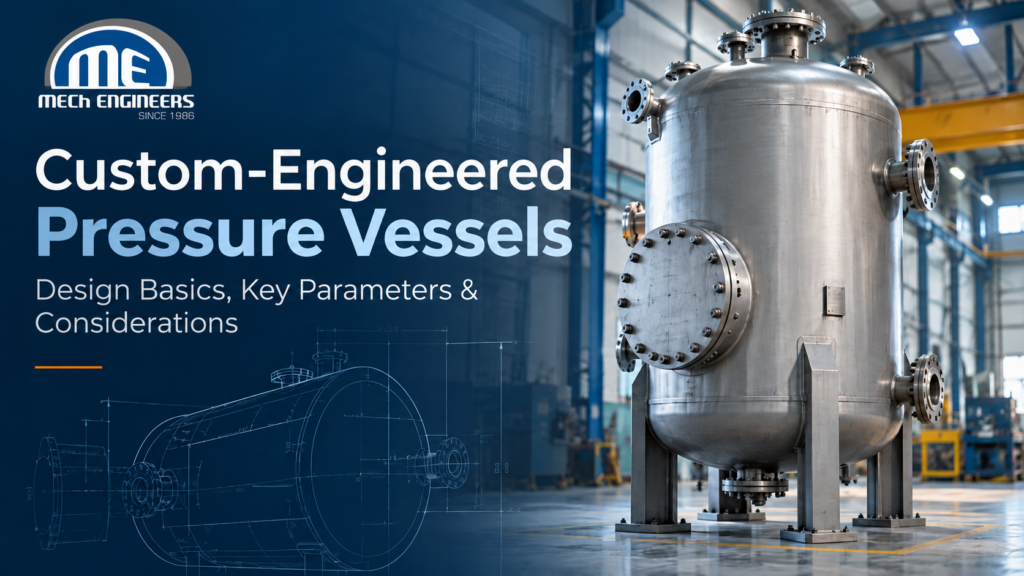
Custom-Engineered Pressure Vessels: Design Basics, Key Parameters & Considerations
A pressure vessel datasheet may contain just a few key figures: design pressure, design temperature, corrosion allowance, shell thickness, material, and construction code. But behind each number is an engineering decision. The real challenge…
LATEST NEWS